

From Plan to Protection: 7 Steps to Deploying ZTNA
Highlights at a glance
- Misaligned ZTNA projects can increase—not reduce—risk. This helps you course-correct.
- Many organizations delay deployment due to internal pushback. This guide shows how to prevent that.
- Business stakeholders care about outcomes, not architectures. Learn how to frame wins that drive support.
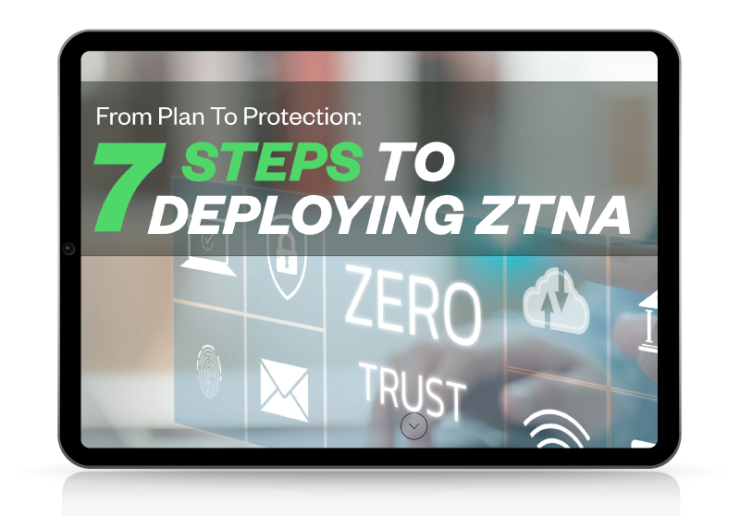
Rethink remote access before it slows you down
When users connect from everywhere—and threats come from anywhere—traditional access models stop working. It’s no longer enough to secure the perimeter or trust a login. You need dynamic access controls that adapt to the way your teams actually work.
ZTNA brings that control. But most deployments never make it past the pilot.
Why many ZTNA projects stall
It’s not the technology. It’s the rollout.
Many organizations begin with broad ambitions: “Zero Trust everything.” Then internal friction sets in. Business units resist new restrictions. Security teams face pushback over user experience. Integration gaps surface between tools already in place. Suddenly, a promising initiative loses momentum—and the risk it aimed to reduce remains.
This guide is built for that moment. It lays out a real-world, operationally grounded approach to getting ZTNA off the ground—and making sure it scales.
Why this guide matters now
- Aligns Zero Trust principles with actual business goals
- Frames access control as an operational shift, not a technology rip-and-replace
- Shows how to sequence deployment for faster wins and broader buy-in
Who should use this guide
This guide is designed for IT and security leaders responsible for modernizing access controls across distributed workforces, hybrid environments, or regulated data flows. If your team is navigating stalled ZTNA pilots, unclear rollout paths, or user resistance, this is the practical blueprint you need.
Why it’s different
You won’t find broad promises or conceptual frameworks here. Instead, the guide outlines seven focused steps—from scoping and segmentation to validation and results framing—that reflect how real teams actually roll out secure access. Each one helps reduce resistance, improve alignment, and build lasting traction.
It’s backed by insights from enterprise deployments, structured around business outcomes, and informed by what causes most initiatives to stall in the first place.
Frequently asked questions
Is this guide technical or strategic?
It’s operational. It helps you turn Zero Trust principles into a workable plan that fits your infrastructure, workforce, and business goals.
Does this apply even if we already have SD-WAN?
Yes. ZTNA and SD-WAN solve different problems. This guide shows how to layer access control over your existing connectivity architecture.
What if we’re not ready to replace VPNs?
You don’t have to. The guide outlines how to use ZTNA to complement—rather than replace—your current tools.
We’re short-staffed. Is this still doable?
Absolutely. The seven-step framework is designed to reduce internal lift by helping you prioritize scope, sequence, and stakeholder alignment.
How does this help with compliance?
By promoting identity-aware access and reducing lateral movement, ZTNA helps enforce granular policies across sensitive data environments.
Related Resources
-
Learn more: Closing the Trust Gap in AI-Driven Networking
Closing the Trust Gap in AI-Driven Networking
-
Learn more: From Fragmentation to Convergence: A Guide to Modernizing Network Security

From Fragmentation to Convergence: A Guide to Modernizing Network Security
-
Learn more: The IT and Security Leader’s Guide to Securing the Distributed Edge
The IT and Security Leader’s Guide to Securing the Distributed Edge
Ready to turn these insights into a reality for your network?
Talk to our team about putting these insights into practice.